Silver Moor Consulting
  • Home
  • About
  • Consultancy
    • Barrier-based auditing
    • Task design
    • Training & competence
    • Procedures & documents
    • Accident & incident investigation
    • Decision support tools
    • Performance dashboards
    • Risk management >
      • Bowtie risk assessment
    • Operational readiness
    • Safety climate surveys
  • Training
    • Reducing maintenance error
    • Accident investigation training >
      • Accident investigator training
      • Senior accident investigator
      • Root cause analysis
      • On-Train Data Recorder (OTDR) analysis
    • Writing safety critical instructions
    • Bowtie risk methodology
    • Risk assessment
    • Trainer and coaching skills
    • Process mapping
    • Writing better reports
    • Creating a vision
  • Coaching
    • Accident investigator coaching
    • Consultant coaching
    • Manager coaching
  • Contact
  • News
  • Resources
    • Rail images
    • Tram images
    • Bus images
    • Human factors images
    • Event images
    • 1930s road safety advice
    • 1960s railway workshop safety
    • BR Training Manuals
  • Clients
  • Privacy

'Bad' human factors

27/10/2014

0 Comments

 
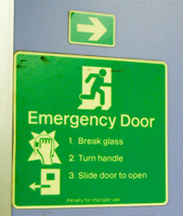
Emergency exit signWhich way would you try to slide the door?
We've just posted some examples of 'bad' human factors that we've come across - things that have (or are likely to) shape the actions of people in an undesirable way. Take a look at these examples, and if you have any that you'd like to share please contact us!
0 Comments

Unmanned tram sets off on its own after power problem

20/6/2014

1 Comment

 
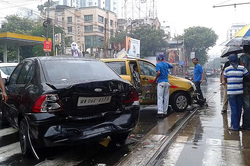
Tram crash, CalcuttaPhoto: Rush Lane
When a driver left his tram to investigate a problem with the power supply, an unfortunate error led to considerable damage. The driver had left the tram in 'on' mode, so when the power problem disappeared the now driverless tram set off on its own. To see the full story, read the story on the Rush Lane and the Times of India's websites.
Eliminating the potential for errors like this is normally common practice, but much of Calcutta's tram system is now very old. Nevertheless, this accident should raise concerns about many human factors issues including task design, training and competence and procedural controls as well as risk management. 

1 Comment

Road painting errors

10/6/2014

0 Comments

 
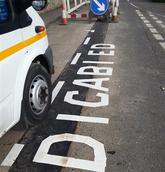
PicturePhoto: KentOnline
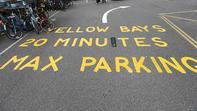
Human errors often have humorous rather than safety critical consequences. The two examples here illustrate system failures which caused embarrassment for the organisations involved, but probably nothing more.
In the top example, a sub-contractor working on street repairs after gas main works made the road marking error. Instead of marking the temporary space as 'DISABLED', a rather different marking was made. The operator was probably doing the best they could - the real failure is in the system that allowed the error to occur. See the KentOnline news report for the full story.

PicturePhoto: BT.com
In this second example, road painters repeated a spelling error that was first introduced on the section of road two years previously. Here, 'MINUTES' was replaced with 'MINUITES'. Again, the error lies in the system somewhere, not with the individual carrying out the marking. For the full story, see BT.com.

0 Comments

Human error and narrow escapes in military training exercises

15/3/2014

0 Comments

 
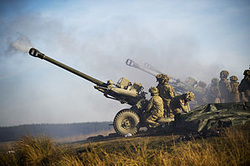
Royal Artillery firing 105mm Light Guns on exerciseFiring 105mm guns on exercise (image: MoD)
It's been a bad week in the news for the UK's military. Two human-related mishaps during training exercises could have had serious consequences. In the first incident, on Salisbury Plain, a 105mm round was fired towards the safe test firing area but because the wrong charge was used it went "much further" - 5 miles further. It exploded in a farmer's field, just 300m short of the main railway line. See the news story on the BBC website.
In the second incident, a torpedo was accidentally launched from HMS Argyll inside Devonport naval base. The torpedo was an unarmed version used for testing drills, so did not explode when it impacted a safety fence. See the news story here.
In both cases, the investigations have been launched to try to understand the causal factors.


See our pages on incident investigation and common causes of human error to see how we are helping organisations manage the 'human factor' in their business.

0 Comments

Power engineer error leads to US firefighter electric shock

17/2/2014

0 Comments

 
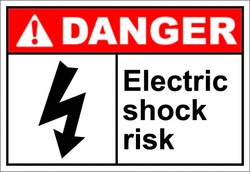
Electric shock warning
A fallen power cable caused a wildfire in the US state of Washington. Electrical power company engineers attending the incident believed that the other end of the power cable was also disconnected at the top of a pylon and so posed no danger to firefighters on the ground. However, the power cable was still live at 7.2kV and when a volunteer firefighter used a portable fire extinguisher on the fire he received an electric shock. Fortunately the firefighter was unharmed. For the full news story, see the Tri-City Herald report.

See our pages on procedures and documents, risk management and accident investigation for information about managing risk in an operational environment.

0 Comments

Organisational deficiencies lead to human error in nuclear sector

7/2/2014

0 Comments

 
Nuclear power plant
Research by the International Atomic Energy Authority (IAEA) published in December 2013 showed that 80% of significant events at nuclear power plants can be attributed to human error, while only 20% can be attributed to equipment failure. 
For many years the belief has been that human error is an individual-focused phenomenon or motivational issue. However, it has recently been identified that approximately 70% of these errors are down to weaknesses in organisational processes and cultural values. These organisational deficiencies are often hidden in management processes, structures and values and can create workplace conditions that lead to a human error or reduce the effectiveness of risk control barriers. The full report can be viewed here.

See our pages on how we help organisations manage the conditions that can lead to errors and our accident investigation pages.

0 Comments

Tragic error causes seven deaths on military training exercise

23/1/2014

0 Comments

 
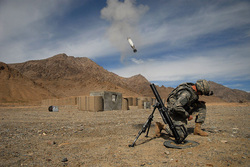
PictureA US Marine firing a 60mm mortar
In March 2013 seven US Marines were killed when a Marine double-loaded a 60mm mortar on a training exercise. Eight other Marines were injured by the explosion.
The investigation concluded that several common 'human factors' led to the accident: 
  • inadequate training and preparation;
  • communication (firing commands);
  • procedures; 
  • supervision, and;
  • task workload. 
See the full news story on the USA Today website.

Fortunately, in industry the outcome of human error is rarely this significant. For details on how we can help identify and manage human factor risks in industry, see our consultancy pages.

0 Comments

US metro crash - long working hours may be a factor

14/1/2014

0 Comments

 
PictureMetro North crash. Image by NY Times
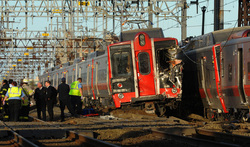
A Metro-North train derailed in the Bronx on December 1st 2013, killing four people and injuring more than 70. The train had entered a curve at nearly 3 times the permitted speed. Recent investigations appear to show that overtime working is endemic on the railroad; the driver in the crash had worked the equivalent of a six-day week every week for the past three years.
See the full news article on the NBC website.
In the UK, fatigue of safety critical workers must be managed; the Office of Rail and Road has issued guidance on the risks of excessive working hours and how these can be managed (see here).
For details on how we can help identify and manage human factor risks in industry, see our consultancy pages.


0 Comments

Tram collision on Manchester Metrolink extension

26/12/2013

0 Comments

 
A collision on the new Metrolink Oldham town centre line has sparked calls for layout changes at a busy roundabout.
See the news report in the Oldham News for more details.
0 Comments

Clapham rail accident, 25 years on

21/12/2013

0 Comments

 
On the 12th December 1988 a crowded passenger train crashed into the rear of another train that had stopped at a signal, and an empty train, travelling in the other direction, crashed into the debris. Thirty-five people died and nearly five hundred were injured.
The primary cause of the crash was incorrect wiring work on the signalling system; a redundant wire was left connected at one end, and bare at the other. The wire came into contact with a relay, causing a signal to display a 'wrong side' green aspect regardless of the presence of a train on the track circuit. The signalling technician responsible had also worked a seven day week for the previous thirteen weeks.
Twenty five years on from the Clapham Junction rail disaster, a survivor is still remembering fresh details from that harrowing day.

See the news item here, and the accident report on the Railways Archive website here.
0 Comments
<<Previous
Forward>>

    Archives

    November 2020
    November 2019
    June 2019
    April 2019
    March 2019
    November 2018
    June 2018
    May 2018
    December 2017
    September 2017
    March 2017
    February 2017
    January 2017
    November 2016
    September 2016
    July 2016
    June 2016
    May 2016
    April 2016
    March 2016
    February 2016
    November 2015
    October 2015
    May 2015
    March 2015
    February 2015
    January 2015
    November 2014
    October 2014
    September 2014
    June 2014
    March 2014
    February 2014
    January 2014
    December 2013

    Categories

    All
    Accident
    Awards
    Business Skills
    Chartered Management Institute
    Coaching
    Communication
    Construction
    Cranes
    Design
    Distraction
    Events
    Fatigue
    Handover
    Heritage Railways
    Human Error
    Investigation
    Leadership
    Light Rail
    Maintenance Error
    Management
    Medical
    Mentoring
    Metro
    Military
    Mindfulness
    Networking
    Nuclear
    Organisational Failures
    Procedures
    Rail
    Resilience
    Risk
    Rule Compliance
    Social Care
    Strategy
    Supervision
    Task Workload
    Training And Competence
    Tram

    RSS Feed


Silver Moor Business Consulting LLP is registered in England and Wales. Registered Number: OC389666. VAT Registration No. GB 178 0758 72 
Registered Office: Coombe Wood House, Winscombe Hill, Winscombe, North Somerset, BS25 1DH, United Kingdom.

© Silver Moor Business Consulting LLP 2023. All rights reserved.